
Teaching Emotions God's Way: The Simple Framework That Transforms Big Feelings into Faith Lessons
Your four-year-old is melting down in the grocery store checkout line. Again. The frustrated tears, the angry shouts, the looks from other shoppers : you've been here before. As you try to calm your little one, you're probably not just trying to survive the tantrum and get home with your groceries intact.
You want to raise a child who understands their emotions and sees God's purpose in them. You want your kids to know that big feelings aren't something to be ashamed of, but opportunities to grow closer to their Heavenly Father.
The challenge? Most parenting advice either ignores faith completely or feels so "Sunday school-ish" that it doesn't work in real-life moments when emotions are running high.
The Heart Behind the Framework
Before we dive into the practical stuff, let's get one thing straight: emotions aren't the enemy. God created us as feeling beings, and even Jesus experienced the full range of human emotions : from righteous anger in the temple to deep sorrow at Lazarus's tomb.
Your child's big feelings aren't a design flaw that needs fixing. They're actually a beautiful part of how God made them to experience and interact with the world.
The FEEL Framework: Four Steps to Transform Any Emotion
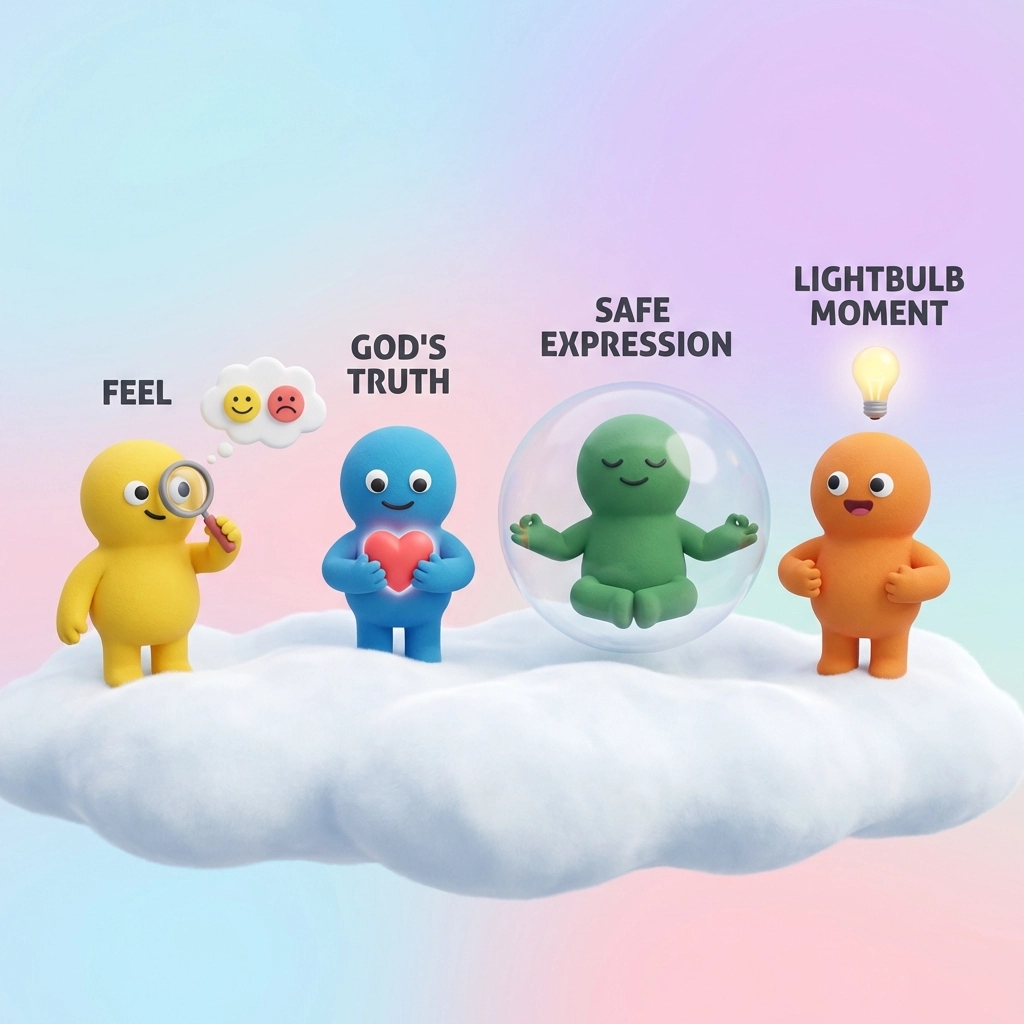
Here's the simple framework that's been game-changing for Christian families everywhere. It's called FEEL:
F - Find the feeling
E - Explore God's truth
E - Express it safely
L - Learn the lesson
Let's break down each step so you can start using it today (without it feeling cheesy or complicated).
Step 1: Find the Feeling
This isn't about immediately jumping to solutions. It's about helping your child identify and name what they're experiencing.
Instead of saying "Don't be angry," try:
- "I can see you're feeling something big right now"
- "Your face tells me you might be frustrated"
- "It looks like disappointment is visiting you today"
For younger kids (ages 2-5), use simple feeling words: mad, sad, scared, happy, excited. For older children (6-12), expand the vocabulary: frustrated, disappointed, overwhelmed, anxious, proud.
The goal here isn't to fix anything yet : it's just to acknowledge that the feeling exists and has a name.
Step 2: Explore God's Truth
Once you've identified the emotion, gently connect it to what God says about feelings. This doesn't mean Bible-thumping your upset toddler (that's never going to work). Instead, offer simple, age-appropriate truth.
For different emotions, try these connection points:
Anger: "God gets angry too when things aren't right. He wants us to use our anger to help, not hurt."
Sadness: "Jesus felt sad sometimes too. It's okay to feel sad, and God catches every one of our tears."
Fear: "God tells us not to be afraid because He's always with us. Let's ask Him to help us be brave."
Jealousy: "Sometimes we want what others have, but God has special plans just for us."
Step 3: Express it Safely
God gave us emotions, and He gave us wisdom about how to handle them. This step teaches kids healthy ways to release big feelings.
Create "emotion outlets" that work for your family:
- Anger: punching pillows, doing jumping jacks, drawing angry scribbles
- Sadness: having a good cry, creating a comfort corner, talking to God
- Fear: taking deep breaths, saying a brave prayer, holding a comfort item
- Excitement: dancing, singing praise songs, sharing the joy
The key is giving emotions a safe place to go instead of stuffing them down or letting them explode inappropriately.
Step 4: Learn the Lesson
Every emotion carries a message. This final step helps kids discover what God might be teaching them through their feelings.
Questions to explore together:
- "What do you think this feeling is trying to tell you?"
- "How might God want to use this feeling to help you grow?"
- "What can we learn about God's love from how you're feeling right now?"
This isn't about finding a neat, tidy moral in every emotional moment. Sometimes the lesson is simply that God loves us even when we feel messy inside.
Making It Work with Different Ages
Toddlers and Preschoolers (2-5 years)
Keep it simple and physical. Use:
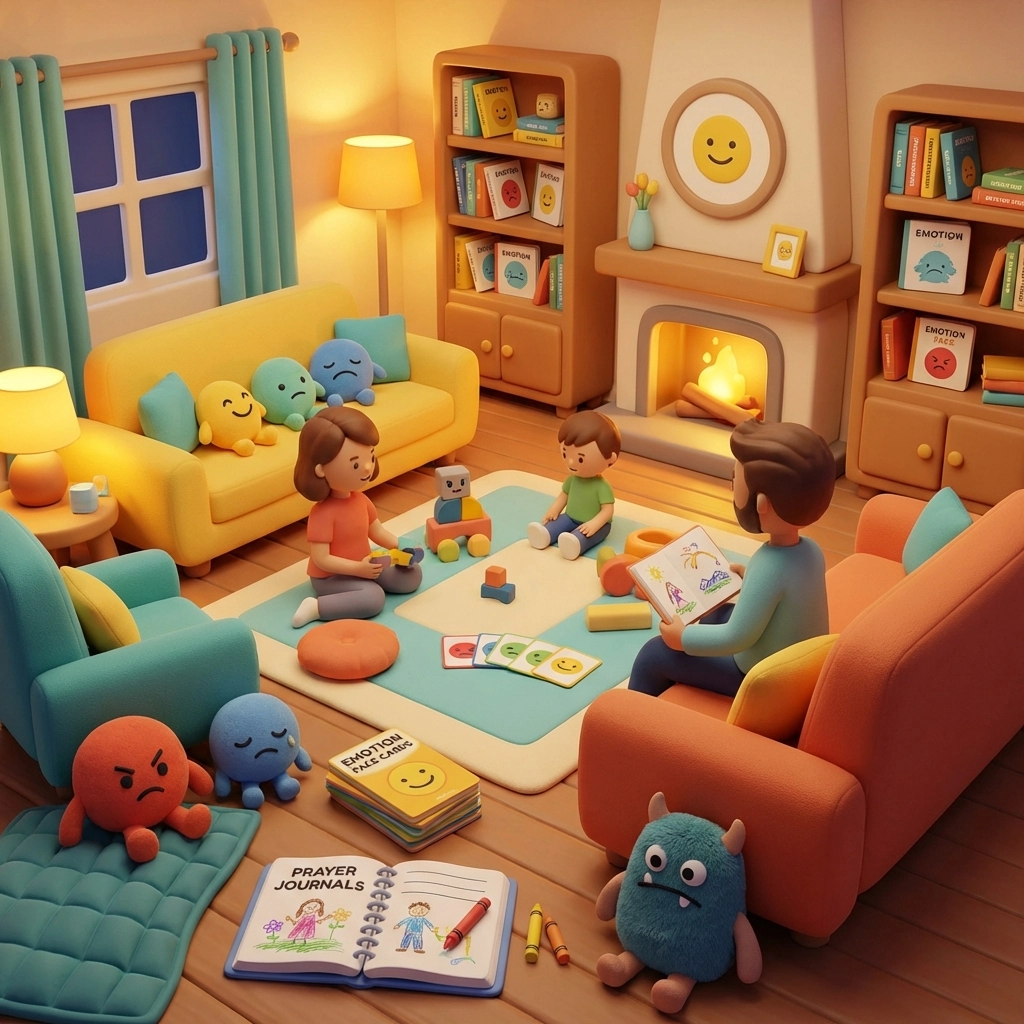
- Emotion face cards or books with feeling characters
- Simple prayers: "God, help me with my mad feelings"
- Physical actions to release emotions (stomp angry feet, give sad hugs)
- Songs that connect feelings to faith
Remember: at this age, you're planting seeds, not expecting full emotional intelligence.
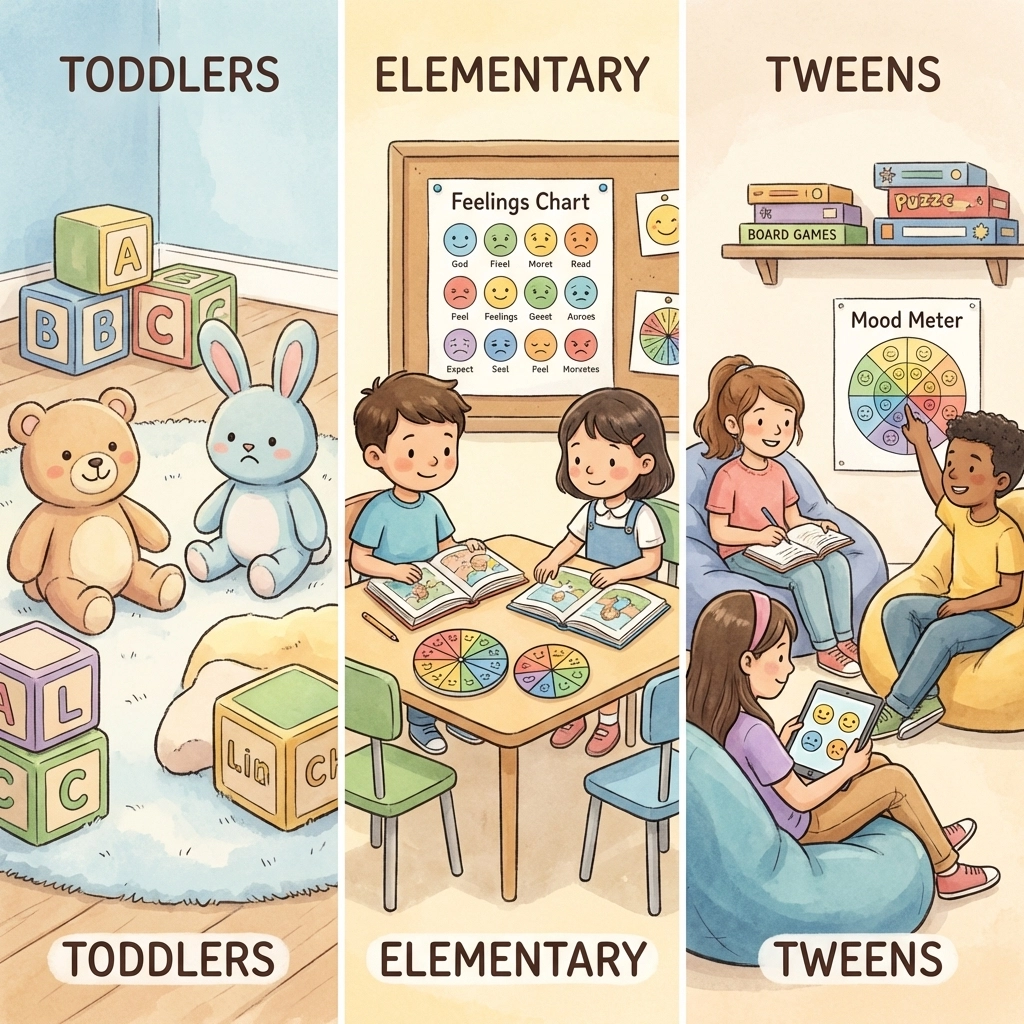
Elementary Age (6-10 years)
This is the sweet spot for the FEEL framework. Kids this age can:
- Understand more complex emotions and situations
- Connect Bible stories to their own feelings (David's fear, Peter's disappointment, Mary's joy)
- Start developing their own coping strategies
- Begin to see patterns in their emotional responses
Consider introducing tools like the Truthkins emotional learning products that make these conversations engaging and memorable.
Tweens and Teens (11+ years)
Older kids need more sophisticated approaches:
- Discuss the difference between feelings and actions
- Explore how emotions can be both blessings and challenges
- Talk about emotional maturity as part of spiritual growth
- Give them space to process with God independently
The Biblical Foundation That Changes Everything
This framework isn't just good psychology with a Christian label slapped on : it's rooted in solid biblical truth.
God experiences emotions: Throughout Scripture, we see God expressing joy, anger, sadness, and compassion. Our emotions reflect His image in us.
Jesus validates our feelings: He wept with Mary and Martha, felt compassion for the crowds, and experienced righteous anger. He never minimized human emotions.
The Psalms give us language: David and other psalmists model honest emotional expression in relationship with God. They don't hide their feelings : they bring them directly to their Heavenly Father.
Wisdom literature teaches emotional intelligence: Proverbs is full of practical guidance about managing anger, dealing with disappointment, and finding joy in the Lord.
When the Framework Feels Hard
Let's be honest : some days, you're going to feel like you're failing at this. Your kids will still have meltdowns, you'll lose your patience, and the FEEL framework will be the furthest thing from your mind.
That's okay. God's grace covers our imperfect parenting just like it covers everything else.
Start small:
- Pick one emotion your family struggles with most
- Focus on just the "Find" step for a week
- Add the other steps gradually as they become natural
- Celebrate tiny victories (like your child naming their feeling instead of just screaming)
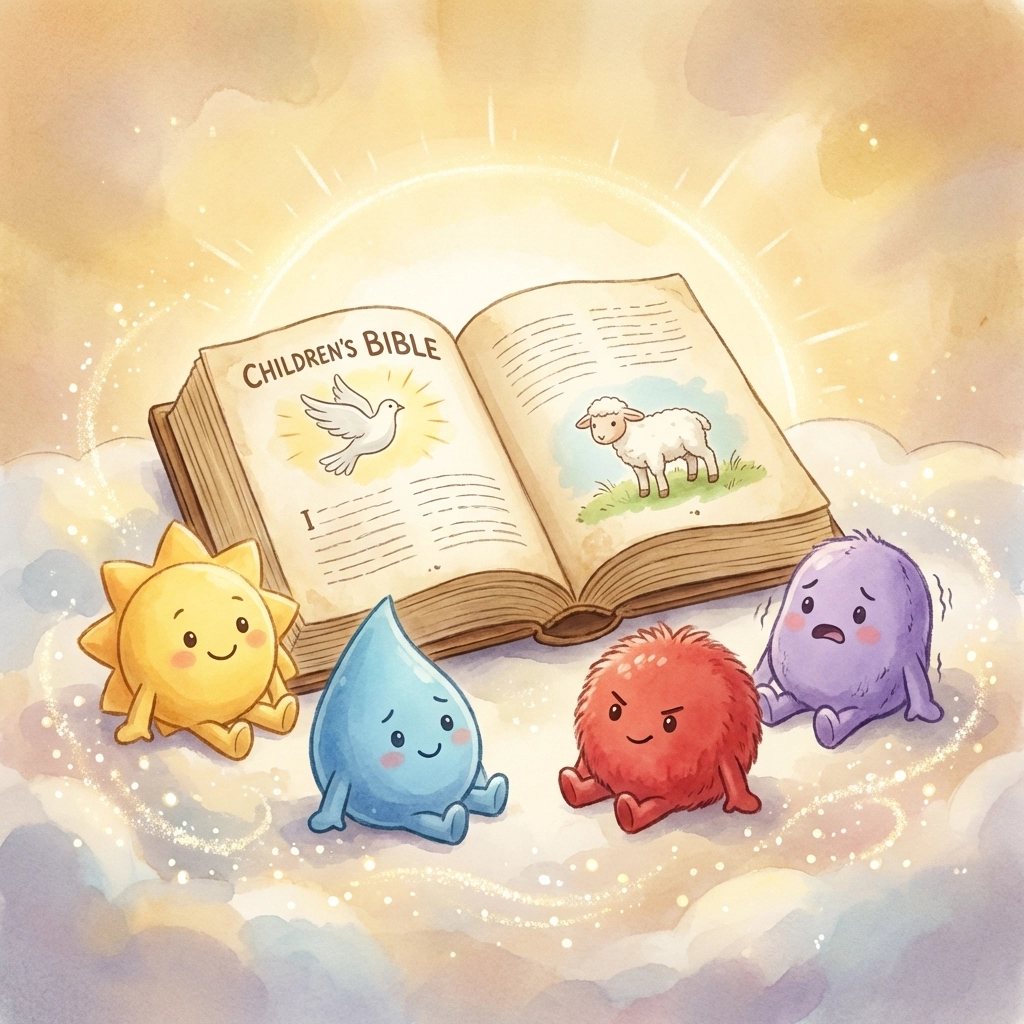
Creating Emotional Faith Traditions
Consider building some of these practices into your family rhythm:
Weekly emotion check-ins: During family devotions, ask everyone to share one feeling they experienced that week and how they saw God in it.
Feeling prayers: Teach kids to bring their emotions directly to God in prayer, following the model of the Psalms.
Emotion gratitude: Thank God for creating them as feeling beings, even when emotions feel hard.
Biblical emotion stories: Read Bible stories that showcase different emotions and discuss how the people in them handled their feelings.
The Long-Term Vision
You're not just trying to manage today's tantrum or tonight's bedtime tears. You're raising a child who will one day face real loss, genuine fear, deep disappointment, and overwhelming joy.
The FEEL framework gives them tools that will serve them their entire lives:
- A vocabulary for their inner world
- Permission to feel without shame
- Healthy ways to process difficult emotions
- A connection between their emotional life and their faith
- Confidence that God loves them in their messiness
Tools That Make It Easier
While you don't need special products to teach emotional faith lessons, having some concrete tools can make the conversations more engaging, especially for visual learners.
The Truthkins collection offers emotion-focused products designed specifically for Christian families who want to blend faith and emotional learning naturally.
Remember: the goal isn't perfect emotional control (that's impossible for adults, let alone kids). The goal is helping your children see their emotions as part of how God created them to experience His world, process His truth, and grow in His love.
Your kids are going to have big feelings. That's not a parenting fail : it's a parenting opportunity. With the FEEL framework, every emotional moment becomes a chance to point them toward their loving Heavenly Father who understands exactly how they feel.